
Walking into a Sydney casino on a busy Friday arvo, the roulette table always draws a crowd, and the zero pocket is where the real money decisions happen. This roulette strategy for jeu zero breaks down how that single green slot shapes every bet you place on the layout. Payroll operations taught me that every decimal counts, and the same discipline applies when you are tracking chips across a spinning wheel. You do not need a maths degree to understand the house edge, just a clear head and a plan before the ball drops.
Reading the Wheel Before You Put Chips Down
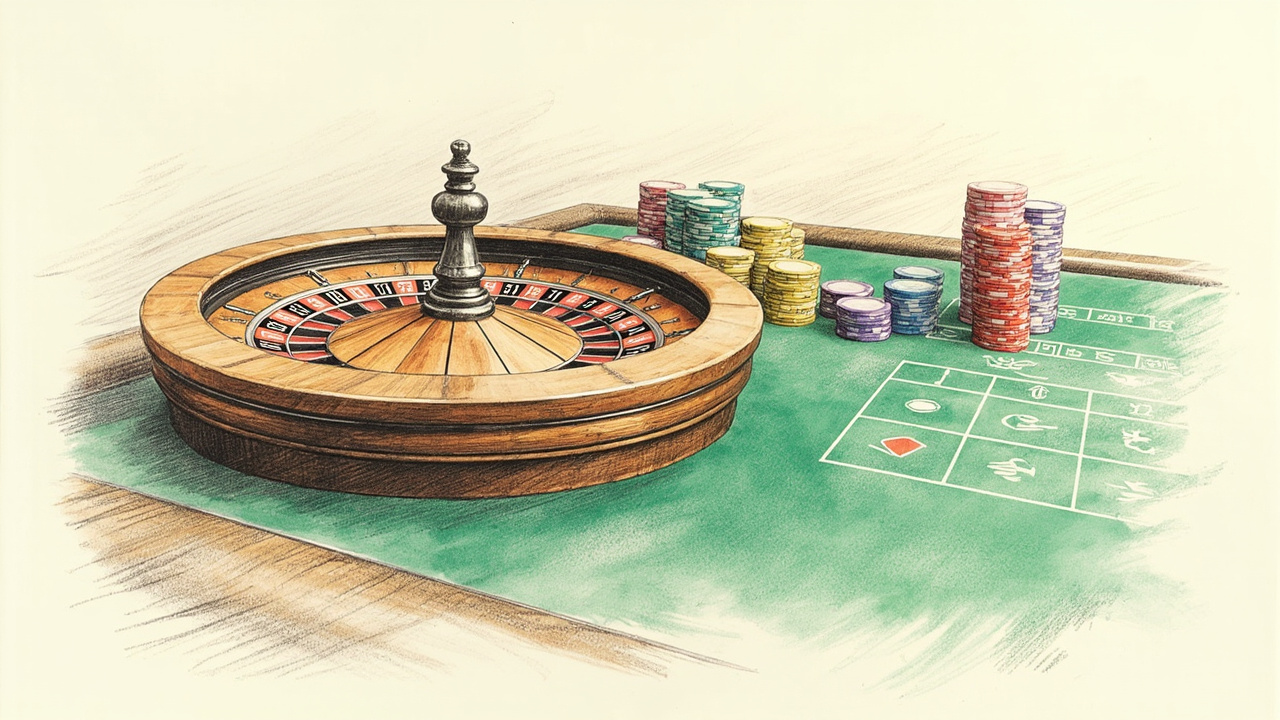
The first thing I notice when I watch punters approach a roulette table is how rarely they pause to read the layout before they start laying chips. Jeu zero refers to the seven numbers that sit closest to the zero pocket on the wheel, and those positions matter because the dealer’s release point and the wheel’s bias can shift slightly from one session to the next. When I ran payroll for an iGaming operator, I learned that small variances compound fast, and the same logic applies here because a single zero hit can wipe out a sequence of outside bets in a matter of spins. You want to watch at least twenty spins before you commit, noting whether the dealer tends to release the ball at a consistent height and whether the wheel settles into a rhythm or stays genuinely erratic. That observation window is not about finding a guaranteed edge, it is about understanding the table you are actually sitting at rather than the one you imagined when you walked in. Some players like to track where the zero lands relative to the previous spin, but the wheel has no memory, so the useful habit is simply checking that the table’s minimum bets fit your bankroll and that the layout’s markings are clear enough to read under bright casino lights.
| Observation point | What to watch for | Practical takeaway |
|---|---|---|
| Dealer release | Height and speed of the ball drop | Adjust bet timing, not bet size |
| Wheel rhythm | Whether spins cluster or scatter | Treat patterns as noise, not signals |
| Table minimums | Chip values and table limits | Match your stake to your session budget |
| Layout clarity | Number spacing and zero marking | Confirm you can place bets without hesitation |
The table above keeps the observation routine simple, because a complicated tracking sheet usually gets abandoned before the second drink arrives. elvis frog trueways for vegas rock vibes
How the Zero Pocket Shapes Your Bet Selection
When you place a bet on the jeu zero section, you are essentially buying coverage on a narrow slice of the wheel, and that coverage comes with a cost that shows up in the payout maths. The zero pocket itself pays thirty-five to one, but the surrounding numbers in the jeu zero block are usually targeted through neighbour bets or split placements that spread risk across a tighter arc. I have sat in on operator reviews where the game mathematics team would walk through how a single zero hit changes the expected return for a sequence of inside bets, and the takeaway was always the same: the zero is not a mystery, it is just a fixed cost baked into every spin. If you are playing a table that offers a neighbour bet covering two or three numbers on either side of zero, you are paying for that coverage with a lower probability of hitting, so the bet only makes sense when it fits a larger staking plan rather than standing alone as a hunch. Charlotte Clarke, Risk and Integrity Manager, Oceanic Gaming Strategy, has pointed out that players who treat the zero pocket as a signal to increase stakes are usually reacting to noise, and that reaction is what turns a manageable session into a rushed one. The practical move is to decide in advance which numbers you will cover, how much each coverage bet costs, and what you will do if the zero hits twice in a row, because that second hit is where most players abandon their own rules.
A Conversation About Staking and Session Control
I asked Liam Lewis, Managing Partner, Pacific Player Protection Institute, how he thinks players should handle the zero pocket when the table starts running hot, and his answer was less about the wheel and more about the player’s own limits. He said the safest staking decisions happen before the first chip is placed, because once the ball is in motion the temptation to chase a zero hit or recover a lost outside bet becomes hard to resist. That comment stuck with me because it mirrors the payroll discipline I used to apply when reconciling shifts across multiple operator accounts, where a clear cut-off point prevented small discrepancies from becoming a messy end-of-week problem. In roulette terms, that cut-off point is your session limit, and it should be set in currency, not in emotions or in how many drinks you have had by the arvo. A workable approach is to split your session bankroll into smaller blocks, treat each block as a standalone plan, and walk away when a block is spent rather than dipping into the next one to keep the action going. The zero pocket will always be part of the game, so the staking question is never whether you can beat it, but whether you can keep your own decisions consistent when it lands.
Interface, Localisation, and Everyday Usability
The usability side of roulette play matters more than most players admit, because a cluttered layout or a confusing bet panel can turn a simple jeu zero cover into a misclick that costs more than the stake itself. When I reviewed operator interfaces during payroll and compliance work, I always checked whether the currency display, the language, and the bet confirmation steps matched the player’s actual expectations, because a mismatch there creates friction that has nothing to do with the wheel. A well built table view should let you place a neighbour bet, a split, or a straight zero chip without hunting through nested menus, and the confirmation prompt should make it obvious which numbers are covered before the spin starts. For players in Sydney, the practical detail is whether the interface shows Australian dollars clearly, whether the localisation uses familiar terms, and whether the search or table filter helps you find the right roulette variant without scrolling through a long list of irrelevant games. When the interface is clean, the zero pocket becomes just another part of the layout you can read quickly, and that speed matters because roulette is a game where hesitation usually means missed bets rather than better decisions.
The same usability logic applies to the way a platform presents its bonus mechanics and payment flow, because a player who cannot tell at a glance how a bonus interacts with roulette stakes will end up making assumptions that the terms do not support. I have seen operator dashboards where the bonus balance sits separately from the real balance and the wagering details are buried in a second screen, and that separation is exactly the kind of design choice that creates confusion at the table. A better setup keeps the currency, the stake limits, and the bonus conditions visible in the same view so you can decide whether a given roulette session fits your plan before you commit. If you are comparing platforms, you can check a local-facing layout that keeps the Australian dollar display and the table filters front and centre, which is the kind of detail you notice when you visit elvis frog trueways for vegas rock vibes and see how a clean interface frames the action without demanding extra clicks. The point is not to find a perfect platform, it is to recognise that a usable interface removes one more source of error from a game where the zero pocket already adds enough uncertainty on its own.
When the wheel slows and the ball settles, the jeu zero block is just one part of the layout, but it is the part that teaches you whether you are playing with a plan or simply reacting to the spin. The practical habit is to treat the zero pocket as a fixed cost, set your session limits in currency, and choose bets that fit those limits rather than the mood of the moment. A clear interface, a sensible staking block, and a willingness to walk away when your block is spent will do more for your session than any attempt to read the wheel as if it were keeping a ledger.